
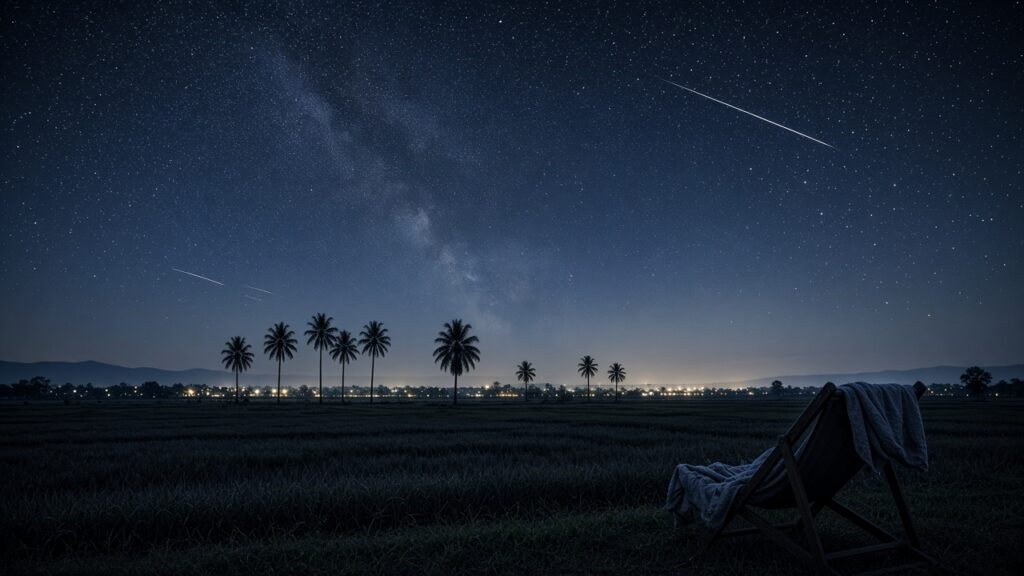
Leonid Meteor Shower 2026: How to Catch Shooting Stars From Thailand, Singapore and Malaysia
Some of the fastest things you will ever see with your own eyes are smaller than a grain of sand. They hit the top of Earth’s atmosphere at about 71 kilometres per second and burn up in a fraction of a second as a bright streak. Every November, Earth passes through a trail of this dust left by an old comet, and we get the Leonid meteor shower.
In 2026 the timing is unusually kind to people in Southeast Asia. The best hours fall before dawn on Wednesday 18 November, and the Moon gets out of the way around midnight. If you work late shifts in Thailand, Singapore or Malaysia, you may already be awake at exactly the right time.
What the Leonids actually are
Meteors are not falling stars. They are tiny bits of rock and dust. According to NASA, the Leonids come from comet 55P/Tempel-Tuttle, a small comet about 3.6 km across that takes roughly 33 years to orbit the Sun. Each pass leaves a fresh trail of debris. When Earth crosses that trail in mid-November, the particles slam into the air and glow.
They are called Leonids because their paths seem to start from the constellation Leo, the Lion. That spot is called the radiant. You don’t have to stare at Leo to see them, though. NASA notes that meteors seen away from the radiant often look longer and more impressive.
The Leonids are also famous for storms. In November 1966, observers saw thousands of meteors per minute for about 15 minutes. NASA says the last real Leonid storm was in 2002. Those storms come roughly with the comet’s 33-year cycle. 2026 is not a storm year.
When to look in 2026
The timeanddate November 2026 sky guide and EarthSky both put the peak on the night of 17–18 November. The shower is active through most of November. The UK’s Royal Observatory Greenwich lists 6–30 November.
The Moon matters a lot. It is a little past half full on peak night, which is bright enough to hide faint meteors. But it sets early. Timeanddate’s Bangkok moon table shows moonset at about 12:18 AM on 18 November. Bangkok’s sky starts to brighten for dawn a little after 5:00 AM. That leaves a dark window of about 12:30 AM to 5:00 AM.
Leo also rises around midnight and climbs higher toward dawn, so the hours just before sunrise are usually the best. Singapore and Kuala Lumpur are 1h 30m ahead of Yangon and 1h ahead of Bangkok on the clock. The same rule still works there: go out after the Moon sets and before dawn. If peak night is cloudy, try the morning of 17 or 19 November. Rates fall off gradually.
How many will you really see?
Expect a few, not a fireworks show. Timeanddate and the Royal Observatory give about 10–15 meteors per hour under ideal dark skies. NASA warns that in ordinary years Leonid rates are often as low as about three per hour.
Light pollution cuts that further. From central Bangkok, KL or Singapore you may only catch the brightest ones, maybe a handful in an hour. Get away from the city glow and the numbers go up quickly. A quiet beach, a rice-field road, or a hill with no streetlights all help.
Watch for fireballs. NASA says the Leonids are known for bright fireballs and for “Earth-grazers”, long colourful meteors that skim low across the horizon. One good fireball can make the whole night worth it.
A small bonus in the sky
Mid-November 2026 has more to see than meteors. EarthSky notes that bright Jupiter and red Mars sit near the Leonid radiant this year, and they appear closest together around 16 November. Before dawn you may also spot Venus low in the east. Timeanddate says it reaches its brightest of 2026 on 27 November. Even if the meteors are slow, the planets give you something to look at.
Simple tips that actually help
- Get away from lights. Distance from the city matters more than any gadget. Even a dark rooftop beats a lit street.
- Give your eyes 20–30 minutes. NASA says your eyes need under 30 minutes to adapt to the dark. Every look at a bright phone screen resets that, so turn the brightness right down or use red-light mode.
- Lie back and look up. A mat, a deck chair or a blanket on the ground works best. Take in as much sky as you can. You don’t need a telescope or binoculars; they make your field of view too small.
- Face roughly east, then relax. Leo rises in the east, but meteors can appear anywhere overhead.
- Plan for insects, damp and safety. In the tropics that means mosquito repellent, water, and something to sit on that stays dry. Go with a friend, tell someone where you are, and don’t wander into unknown fields or onto unlit roads at 3 AM.
- Check the cloud forecast. November is the start of the drier season in much of Thailand, but coastal Malaysia and Singapore can still be showery. Your local weather service is the best guide on the day.
Why it is worth losing a little sleep
Most of us spend November watching shift rosters, payday dates and exchange-rate apps. Lying under a dark sky for an hour is a cheap reset. You are watching dust that left a comet long before you were born, and you are seeing it from the same sky your family sees back home. Yangon is only 30 minutes behind Bangkok, so you could message someone in Myanmar and watch at the same moment. Check the MMKHub world clock to line up the time.
Just don’t trade away sleep you really need. If you have an early shift on the 18th, a short look before dawn is enough. If you work nights, you may already be outside on a break at the right hour. Look up.
Bottom line
The 2026 Leonids peak on the night of 17–18 November. In Southeast Asia, the best window is after moonset (around midnight) until dawn on 18 November. Under dark skies, expect around 10–15 meteors an hour at best. In a big city it will be far fewer, but the Leonids are fast and sometimes very bright. Find a dark spot, give your eyes time, keep the phone away, and be patient.
မြန်မာအကျဉ်းချုပ်
Leonid ဥက္ကာခဲမိုး (shooting stars) က ၂၀၂၆ ခုနှစ် နိုဝင်ဘာ ၁၇ ရက် ညမှ ၁၈ ရက် မနက်အထိ အများဆုံး မြင်ရနိုင်ပါတယ်။ လကြီးက ညသန်းခေါင်လောက်မှာ ဝင်သွားမှာမို့ ညသန်းခေါင်ကျော်ကနေ မိုးမလင်းခင်အထိ ကြည့်ဖို့ အကောင်းဆုံးပါ။ မြို့မီးရောင်နဲ့ ဝေးတဲ့ မှောင်တဲ့နေရာကို သွားပြီး မျက်စိကို မိနစ် ၂၀–၃၀ လောက် အမှောင်နဲ့ ကျင့်ပေးပါ။ မှောင်တဲ့ကောင်းကင်မှာ တစ်နာရီ ၁၀–၁၅ ခုလောက်အထိ မြင်ရနိုင်ပေမယ့် မြို့ထဲမှာတော့ အများကြီး နည်းပါမယ်။ တယ်လီစကုပ် မလိုပါဘူး။ ဘေးကင်းအောင် အဖော်နဲ့ သွားပါ။
Sources: NASA Science, Leonids meteor shower facts and viewing tips; timeanddate.com, Night Sky Guide November 2026 and Bangkok moonrise/moonset and sun tables; EarthSky, Leonid meteor shower 2026 guide; Royal Observatory Greenwich, Leonid meteor shower 2026. Peak times can shift a little, so check a local astronomy source closer to the date. MMKHub is an information site only.