
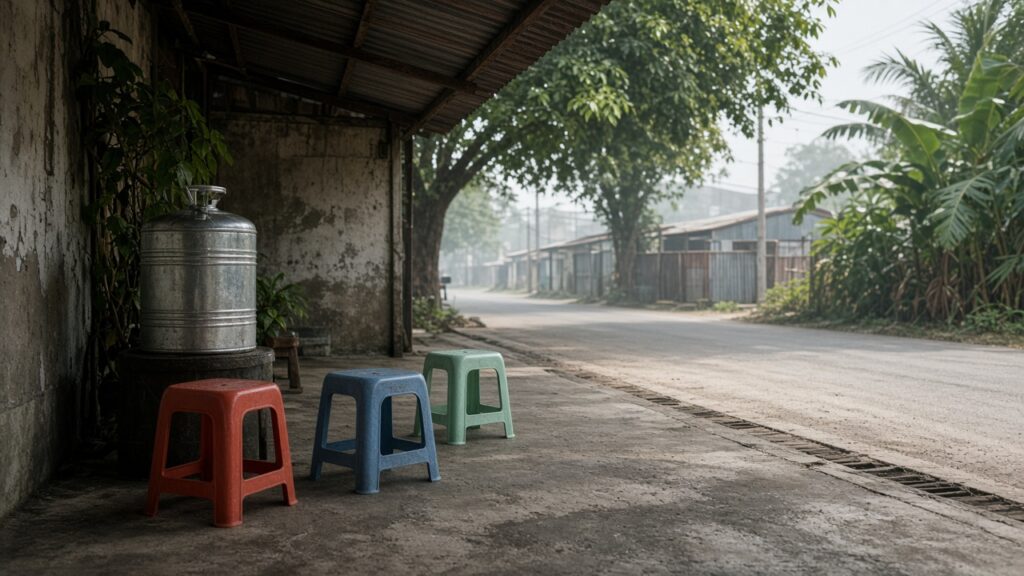
You step outside in Bangkok, Singapore or Kuala Lumpur. The phone says 32°C. Your skin says something harsher — sticky, heavy, like the heat is sitting on you. That gap is not imagination. In humid air, your body loses one of its best cooling tools.
Here is a plain look at why humid heat feels worse than the number on a thermometer, how weather services measure heat stress, and a few practical habits that help Myanmar workers abroad. This is general information, not medical advice — if someone shows confusion, fainting, or stops sweating in extreme heat, seek emergency care.
မြန်မာအကျဉ်းချုပ်
ထိုင်း / စင်ကာပူ / မလေးရှားလို စိုထိုင်းတဲ့နေရာမှာ ချွေးထွက်ပေမယ့် ချွေးမခြောက်လို့ ခန္ဓာကိုယ် အေးမြဖို့ ခက်ပါတယ်။ ဒါကြောင့် သာမိုမီတာက ၃၂°C ပဲ ပြနေရင်တောင် ပူတယ်လို့ ခံစားရတတ်ပါတယ်။ အရိပ်၊ ရေများများ၊ ပေါ့ပါးတဲ့အဝတ်၊ နေ့လည်ပိုင်း ပြင်းထန်အလုပ်ကို လျှော့ — ဒါတွေက အကူအညီဖြစ်ပါတယ်။ မူးဝေ / သတိလစ် / ချွေးရပ်သွားရင် အရေးပေါ် ကုသမှု လိုအပ်နိုင်ပါတယ်။
Sweat only cools you when it evaporates
Your body cools itself mainly by evaporating sweat. Turning liquid sweat into vapour takes heat energy away from the skin. According to explainers from NOAA (the U.S. weather service) and university engineering guides, that process works best when the air is relatively dry.
When the air is already full of moisture — common year-round in Singapore and much of Thailand and Malaysia — sweat evaporates slowly or sits on the skin. You still sweat (sometimes more), but you shed less heat. Core temperature can climb even when the air temperature looks “only” in the low 30s °C.
Useful explainers:
- U.S. National Weather Service — What is the heat index?
- MIT Engineering — Why do we sweat more in high humidity?
Heat index vs WBGT — two different tools
The heat index (sometimes called “apparent temperature”) combines air temperature and relative humidity to estimate how hot it feels in the shade with light wind. NOAA notes it does not fully capture direct sun; full sun can make conditions feel several degrees worse.
For outdoor work and sports, many tropical services prefer Wet Bulb Globe Temperature (WBGT). Singapore’s Meteorological Service explains that WBGT blends humidity/wind effects, radiant heat from sun and surfaces, and air temperature. Same air temperature can produce different WBGT readings when humidity or sun exposure changes.
Singapore’s Ministry of Manpower publishes heat-stress measures for outdoor work that reference WBGT monitoring — including rest-in-shade practices when readings are high. Thailand’s occupational health literature also discusses WBGT-based limits by work intensity. Exact workplace rules depend on your employer and local law; always follow site safety briefings.
- Meteorological Service Singapore — Learn about heat stress (WBGT)
- Singapore MOM — Heat stress measures for outdoor work
What humid heat can do to the body
When heat builds faster than the body can dump it, you can move from mild strain toward heat exhaustion or, rarely, heat stroke. MSS and public-health guidance list warning signs such as weakness, dizziness, intense thirst, nausea, headache, muscle cramps, and confusion. Heat stroke is a medical emergency — very high core temperature with altered consciousness needs urgent help, not “push through one more hour.”
Humid nights matter too. High overnight humidity slows cooling while you sleep, so recovery after a hot day (or a night shift in a warm dorm) can be incomplete. That is one reason workers in tropical cities sometimes feel wiped even when daytime hours look “normal” on paper.
Practical habits for workers abroad
- Respect shade and peak sun. Midday sun raises radiant heat. When the job allows, heavier outdoor tasks earlier or later are easier on the body.
- Drink water before you feel desperate. Clear urine and steady sips beat waiting until you are already dizzy. Sports drinks can help on very long sweaty shifts if your workplace recommends them — water still comes first for most people.
- Choose lighter, looser clothing when rules allow. Tight synthetic layers trap sweat against skin. Light colours reflect more sun outdoors.
- Use rest breaks for real cooling. Standing in shade with airflow beats scrolling your phone in full sun. If your site has a cool rest area, use it.
- Watch teammates. Confusion, stumbling, or someone who suddenly stops sweating in extreme heat is a stop-work signal — get them to a cooler place and get help.
- New arrivals need time. People who just flew in from a cooler place often struggle more in the first days. Ease into heavy outdoor load when the roster allows.
For Myanmar readers on MMKHub
Many diaspora workers juggle outdoor OT, hot kitchens, warehouse floors, and shared rooms with weak fans. Small wins add up:
- Ask about shift timing, outdoor exposure, and rest rules when you compare jobs on MMKHub — heat load is part of the real job, not only the salary line.
- Use the world clock so family calls do not land in the hottest mid-afternoon block when you still need rest after outdoor work.
- Keep an eye on remittance timing on payday with the homepage rates panel — but never skip water or rest to “finish one more hour” in dangerous heat.
MMKHub is informational only. We do not employ workers, run agencies, or give personal medical care. Follow your site’s safety rules and local guidance.
Bottom line
In humid ASEAN cities, the thermometer understates how hard heat feels because sweat cannot evaporate well. Heat index helps for everyday “feels like”; WBGT is the tool many workplaces and tropical weather services use for outdoor stress. Shade, water, lighter clothes, smarter task timing, and watching for warning signs are the boring habits that actually protect you.
Sources: NOAA / U.S. National Weather Service heat index pages; Meteorological Service Singapore heat-stress explainer; Singapore MOM outdoor heat-stress guidance; MIT Engineering humidity/sweat explainer. Always cross-check current workplace and medical guidance for your own situation.