
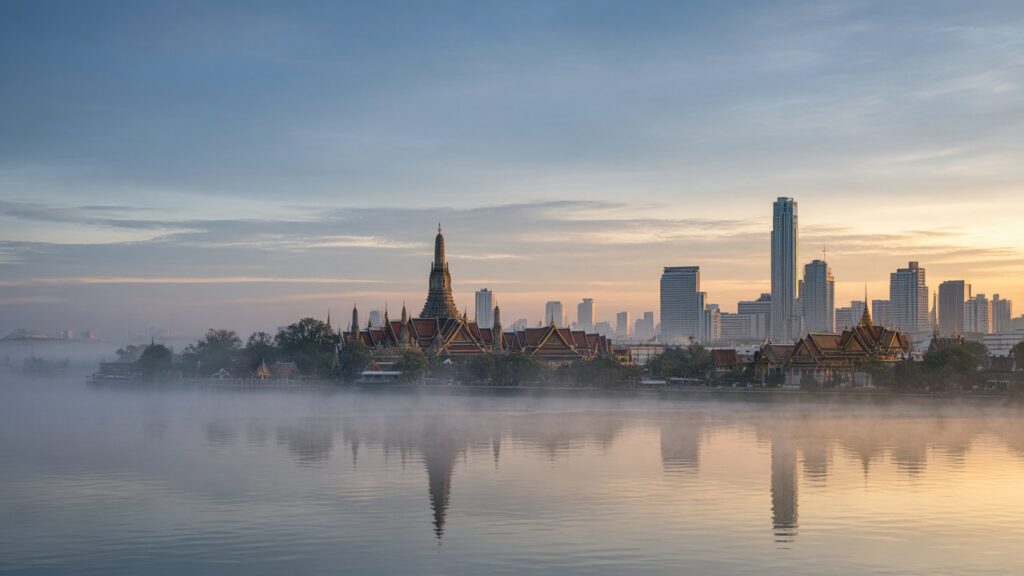
Thailand’s Cool Season 2026: Why November Feels Different in Bangkok (and Sticky in Singapore)
If you work near Bangkok, you may have noticed cooler mornings creeping in — or wondered why they still have not. Singapore colleagues often say nothing changed at all. Southern Thailand, meanwhile, is still talking about rain. Same calendar month; three different feelings outdoors.
Here is a plain look at why Thailand’s cool season works the way it does in 2026, what the Thai Meteorological Department (TMD) is forecasting, and how that differs from equatorial Singapore.
မြန်မာအကျဉ်းချုပ်
ထိုင်းအပူပိုင်း “ရာသီအေး” (cool season) က ၂၀၂၆ မှာ ပုံမှန်ထက် တစ်ပတ်လောက် နောက်ကျပြီး ပုံမှန်ထက် ပိုနွေးနိုင်တယ်လို့ ထိုင်းမိုးလေဝသဌာန (TMD) က ခန့်မှန်းထားပါတယ်။ အရှေ့မြောက်မုတ်သုံ (northeast monsoon) က တရုတ် / မွန်ဂိုလီးယားဘက်က လေအေးခြောက်ကို ထိုင်းအထက်ပိုင်းဆီ တွန်းပို့လို့ မြောက် / အရှေ့မြောက်ပိုင်းမှာ မနက်ခင်းအေး၊ ဘန်ကောက်မှာ နောက်မှ ခံစားရတတ်ပါတယ်။ စင်ကာပူက အီကွေတာနားမှာမို့ ဒီလို “ဆောင်း” မရှိသလောက်ပါ။ တောင်ပိုင်း (ပင်လယ်ကွေ့ဘက်) ကတော့ နိုဝင်ဘာ–ဒီဇင်ဘာမှာ မိုးများနိုင်သေးလို့ ရေကြီး / လှိုင်းထန်မှု သတိထားပါ။
What “cool season” actually means in Thailand
Thailand does not get a European winter. What locals call the cool season is roughly mid-October to mid-February: fewer soaking southwest-monsoon days in the upper country, clearer skies in many inland provinces, and mornings that finally feel less sticky — especially in the North and Northeast.
According to the Thai government guide on monsoon winds and Thailand’s climate, that shift is driven by the northeast monsoon. High pressure builds over Mongolia and northern China. Cooler, drier continental air spills south. By the time it reaches Thailand it has already lost a lot of moisture over land, so upper Thailand often gets clearer, cooler weather — while the South can still pick up Gulf moisture and stay rainy.
The 2026 forecast: later, and milder
In mid-October 2026 the TMD said this cool season would start about a week later than usual and run until around mid-February 2027. Coverage summarised by Thai Rath and The Straits Times points to:
- Upper-Thailand average minimums around 22–23°C — about 2°C above the long-term normal (~19.9°C)
- Bangkok lows often around 19–21°C once the cooler pattern settles
- The coldest stretch likely from late December 2026 into early February 2027
- Mountain peaks that can still see frost on some nights
- A strengthening El Niño toward late 2026 that may keep many nights milder than last year
So if early November still feels warm and showery around the capital, that fits the “late start” story — not a broken season.
Bangkok vs the North vs the South
North and Northeast: Cool mornings arrive earlier and cut deeper. From mid-November, stronger high-pressure pulses from China usually make the chill more persistent. Factory towns far inland often feel the change before coastal industrial estates.
Bangkok and the East (Rayong, Chon Buri corridors): Mid-October to mid-November can still bring thunderstorms over part of the area, with only some cool days and morning fog. The more reliable “jacket in the morning, T-shirt by lunch” pattern is expected from mid-November onward.
South (Chumphon downward, Gulf side): This is the odd one out. While upper Thailand dries and cools, the northeast monsoon can still feed heavy rain, strong Gulf waves, and flood risk through November–December. Workers travelling south for leave should watch TMD warnings, not assume “cool season = dry everywhere.”
Why Singapore (and much of Malaysia’s west) stay sticky
Singapore sits near the equator. It does not get the same continental cold-air pulses that reshape upper Thailand. You still get wet and slightly less-wet spells, and the occasional Sumatra haze story in other months — but not a Bangkok-style cool season. That is why a Myanmar worker who moves from Rayong to Jurong often says the nights never “turn.”
If you are comparing living costs or job moves across hubs, keep the climate difference in mind alongside pay: see the Thailand, Singapore and Malaysia community hubs, plus today’s MMK rates and the Thailand job board filter.
Practical tips for workers this November
- Layer for mornings, not the whole day. A light jacket for the bike or songthaew at 6 a.m. is often enough; midday heat still returns.
- Fog and wet roads. Dense morning fog is part of the TMD picture for Bangkok later in the season — leave a few extra minutes for the commute.
- South travel = rain plan. Gulf-coast leave in Nov–Dec needs a flood and ferry/wave check, not only a hoodie.
- Dorm air-con vs outdoor air. Cooler nights outdoors do not cancel dry air-con sinus issues indoors — drink water and do not sleep under a direct blast all night. (Humid heat outdoors is a different problem; we covered that in why humid heat feels worse.)
- World clock when calling home. Cooler Bangkok mornings are still the same Myanmar time offset — use the world clock pages if you are coordinating family calls across SG/MY/AU.
Bottom line
Thailand’s cool season is a monsoon-geography story, not a light switch. In 2026 it is forecast to arrive a little late and run a little warmer than usual, with Bangkok’s clearer chill more reliable after mid-November, while Singapore stays near-equatorial sticky and the Thai South can remain wet and rough at sea. Check the day’s TMD forecast before you plan a day off — and dress for the morning you actually have.
Sources: Thai Meteorological Department seasonal outlook via Thai Rath (15 Oct 2026) and The Straits Times; THAILAND.GO.TH — monsoon winds and climate. Informational only — not a weather warning service; always confirm with official forecasts before travel.