
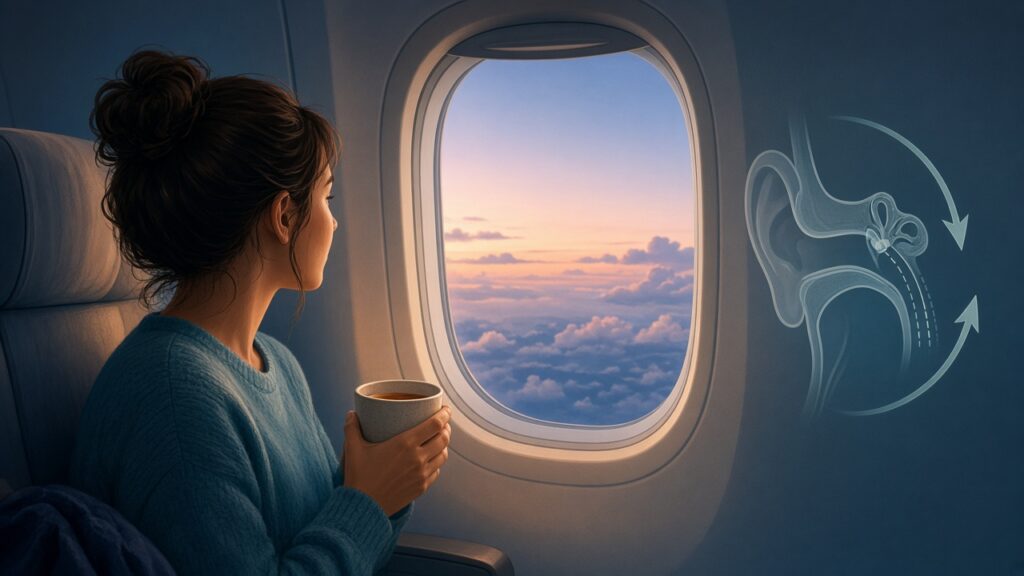
The seatbelt sign comes on. The plane starts down toward Bangkok, Singapore, or Yangon. Somewhere behind your eardrum, a space the size of a pea begins to feel “full,” then dull, then sharp — as if someone pressed a thumb against the inside of your ear.
That squeeze has a name: airplane ear. It is not the cabin “losing air,” and it is not an app glitch. It is a pressure mismatch, explained clearly by ear clinics, and it is one of the most common medical complaints of people who fly. Here is the plain science — and what usually helps — if you work abroad and fly home, or hop between Thailand, Singapore, Malaysia, Australia and New Zealand.
မြန်မာအကျဉ်းချုပ်
လေယာဉ်တက်/ဆင်းချိန်မှာ ကက်ဘင်ဖိအား ပြောင်းမြန်လို့ နားစည် အတွင်းနဲ့ အပြင် ဖိအား မညီတဲ့အခါ နားပိတ်၊ နားကိုက်၊ အသံဝေလာတတ်ပါတယ် (airplane ear / ear barotrauma)။ နားအလယ်ကို လည်ချောင်းနောက်ဘက်နဲ့ ဆက်ထားတဲ့ ပြွန်ငယ် (eustachian tube) က ဖိအားညှိပေးတယ်။ မျိုချခြင်း၊ ဟအောက်ခြင်း၊ ပီကေဝါးခြင်းက ပြွန်ကို ဖွင့်ကူညီတတ်ပါတယ်။ ဆင်းသက်ခါနီး မအိပ်ပါနဲ့။ နှာစေး/နားကိုက်/ပေါင်နာ ရှိရင် မပျံခင် ဆရာဝန်နဲ့ တိုင်ပင်ပါ။ နာကျင်မှုပြင်း၊ နားက သွေး/အရည်ထွက်၊ ကြားမှုမကောင်းတာ ရက်အတော်ကြာရင် ဆေးကုသမှု ခံယူပါ။ ဒီစာသည် အချက်အလက်သာဖြစ်ပြီး ဆေးကုသမှု အကြံပြုချက် မဟုတ်ပါ။
What “airplane ear” actually is
The Mayo Clinic describes airplane ear as stress on the eardrum when the air pressure in the middle ear and the air pressure outside the ear fall out of balance. It often shows up as a plane climbs after takeoff or descends for landing. Doctors also call it ear barotrauma, barotitis media, or aerotitis media.
The same pressure story can appear, in milder form, in a fast lift or on a mountain road — and in a more serious way when scuba diving. On a passenger flight it is usually temporary.
Common signs, according to Mayo Clinic and Cleveland Clinic, include a stuffed or full feeling, discomfort, and muffled hearing in one or both ears. A severe case can bring stronger pain, ringing (tinnitus), a spinning feeling (vertigo), or — rarely — bleeding or fluid from the ear, which can mean the eardrum is injured. MedlinePlus notes that hearing loss from barotrauma is almost always temporary, but it should not be ignored if it hangs on.
Why the cabin does this to a tiny tube
Your middle ear is a small air pocket behind the eardrum. A narrow passage — the eustachian tube — runs from that pocket to the back of your nose and throat. The American Academy of Otolaryngology–Head and Neck Surgery says this tube is about as wide as a pencil lead. When it opens, air can move in or out so pressure on both sides of the eardrum stays even. Swallowing or yawning is often enough to open it.
The trouble is speed. The CDC Yellow Book (2026) explains that U.S. rules ask commercial aircraft to keep cabin pressure no “higher” than the equivalent of about 2,440 metres (8,000 feet) above sea level. In everyday flying, cabins are typically held around the equivalent of 1,830–2,440 metres (about 6,000–8,000 feet). That is still a real change from the runway in Bangkok, Changi, KLIA, Sydney — or Yangon.
On the way up, cabin pressure falls quickly. On the way down, it rises again. If your eustachian tube cannot match that change in time, the eardrum is pushed inward or outward. That stretch is the fullness and pain. Descent often feels worse simply because the pressure is climbing while many people are tired, a bit dry-mouthed, or already dozing.
The same CDC chapter notes that cabin air is usually dry (often around 10–20% humidity). Dryness does not cause airplane ear by itself, but a dry, swollen nose can make that little tube harder to open.
What usually helps (and what clinics actually recommend)
Self-care is the first line for most people:
- Yawn and swallow during takeoff and landing. Sucking a sweet or chewing gum gives you a reason to keep swallowing — Mayo Clinic’s basic advice.
- Stay awake for climb and descent. Sleeping through landing is a known risk, because you stop doing the small motions that open the tube. This matters on late Yangon or midnight Bangkok arrivals when the cabin is dark and everyone else has nodded off.
- Try a gentle Valsalva, not a force. Pinch your nostrils, keep your mouth closed, and blow softly as if fogging a pair of glasses — not as if you are trying to burst a balloon. Mayo Clinic and ENT Health both say gently. You may hear a small pop if the tube opens. If it hurts, stop.
- Filtered “airplane” earplugs can slow the pressure change a little, but Mayo Clinic notes you still need to yawn and swallow. They are an extra, not a substitute.
Anything that blocks or swells the eustachian tube raises the odds: a cold, sinus infection, hay fever, or a middle-ear infection. Mayo Clinic’s practical suggestion is to change plans if you can when you are badly congested, and to talk with a clinician after recent ear surgery before you fly.
Some people use a nasal spray or an oral decongestant about 30 minutes to an hour before takeoff and landing, or take their usual allergy medicine about an hour before a flight. That is clinic-listed advice, not a prescription from MMKHub. Mayo Clinic warns that nasal sprays used longer than about three to four days can make stuffiness worse, and that oral decongestants are a poor fit for some people with heart disease, a heart-rhythm problem, or high blood pressure, and during pregnancy. ENT Health adds thyroid disease to the “ask a clinician first” list. Do not give oral decongestants to young children unless a clinician says so — Mayo Clinic advises against them for that age group. A bottle, pacifier, or sips of a drink help little kids swallow during climb and descent instead.
When it is more than a nuisance
Airplane ear usually eases once the pressure evens out, or within a few hours. Seek medical care rather than waiting it out if you have:
- Severe pain, dizziness/vertigo, or ringing that does not settle
- Hearing that stays muffled for more than a few days (Mayo Clinic’s threshold)
- Fluid or blood from the ear — Cleveland Clinic treats that as a reason to get urgent help, because it can signal a ruptured eardrum
- Fever or symptoms that are getting worse after you land (MedlinePlus)
This article is general information from published medical explainers. It is not a diagnosis and not a substitute for a nurse, doctor, or ENT clinic where you live or where you land.
Practical notes if you fly for work or leave
- Check the real flight, not a forwarded screenshot. Times slip. MMKHub’s Yangon (RGN) departures and arrivals pages are a starting point — always confirm with the airline or airport.
- Tell the person meeting you the landing city time, not Yangon time by habit. Myanmar stays on UTC+6:30 all year. Bangkok is 30 minutes ahead; Singapore and Kuala Lumpur are 1 hour 30 minutes ahead. The world clock and our earlier note on why some countries change clocks help when you call home from the gate.
- A stuffed nose on a factory week is a flying issue, not only a comfort issue. If you are choosing between pushing through a bad cold and a paid ticket, ask a clinician — especially before a dive trip or if you already get painful flights.
- Keep official contacts handy, not a chat “helper.” Bookmark the embassy information hub for Bangkok, Singapore and Kuala Lumpur. Job hunting still belongs on public listings via the jobs board — not a stranger who offers to “hold your seat” in exchange for an OTP.
- New city after you land? Offline maps help when your ears (and your data) are tired — see how phone maps find you. Community hubs for Thailand, Singapore, Malaysia, Australia and New Zealand collect practical pages. Planning one rest day near the Eastern Seaboard? Try the Day-Off Planner.
Bottom line
Your ears pop because a pencil-lead tube is trying to catch up with a cabin that is mimicking a mountain several kilometres high. Yawning, swallowing, staying awake for climb and landing, and going gently — not forcefully — on a nose pinch usually solve it. If pain, drainage, or muffled hearing hangs around, that is a clinic visit, not a “wait until the next shift” problem.
Informational only. MMKHub is not a clinic, airline, or travel agency. Confirm flight times with the carrier, and health decisions with a qualified clinician. Sources consulted 8 Nov 2026 (Asia/Rangoon): Mayo Clinic (airplane ear, updated 15 Apr 2025); Cleveland Clinic; MedlinePlus (review 29 Apr 2026); AAO-HNS / ENT Health; CDC Yellow Book 2026, Air Travel (23 Apr 2025).